Ice Dams in Flagstaff: Why Attic Heat Loss Is the Real Cause (Not the Snow)
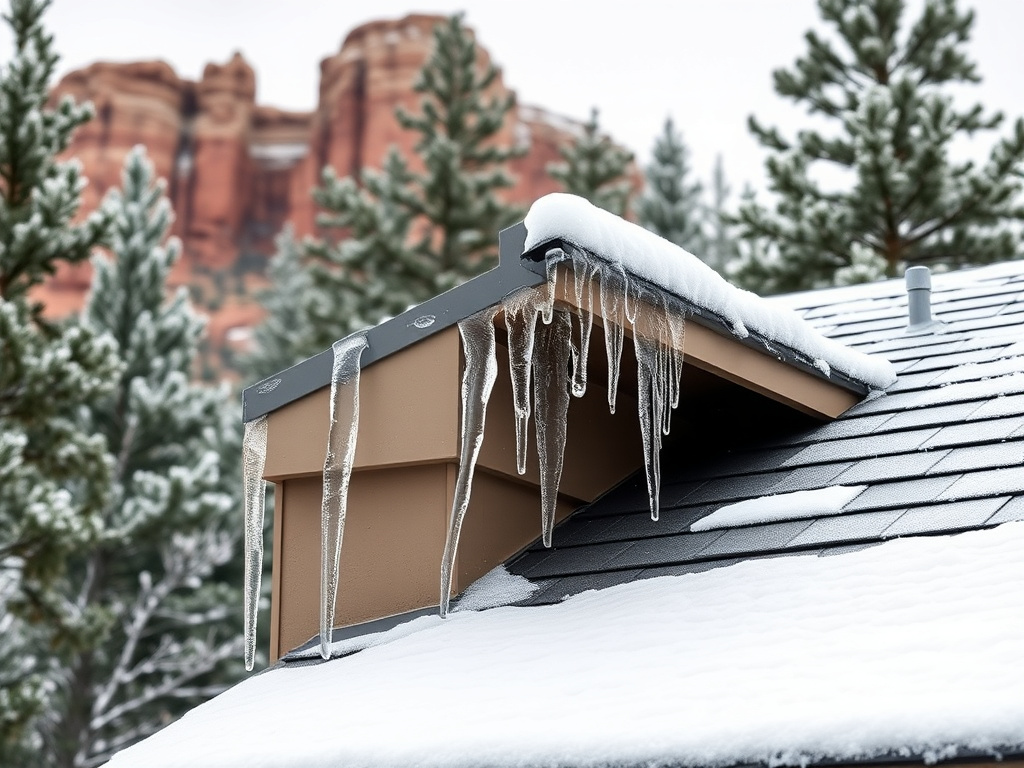
Every winter, Flagstaff homeowners deal with the same frustrating pattern: a thick ridge of ice builds up along the eaves, water starts backing up under the shingles, and a stain shows up on a ceiling or in a soffit that has nothing obviously wrong with it. The instinct is to blame the snow — Flagstaff sees around 100 inches of it most years — but snow alone doesn't cause ice dams. Heat does.
The actual mechanism behind an ice dam
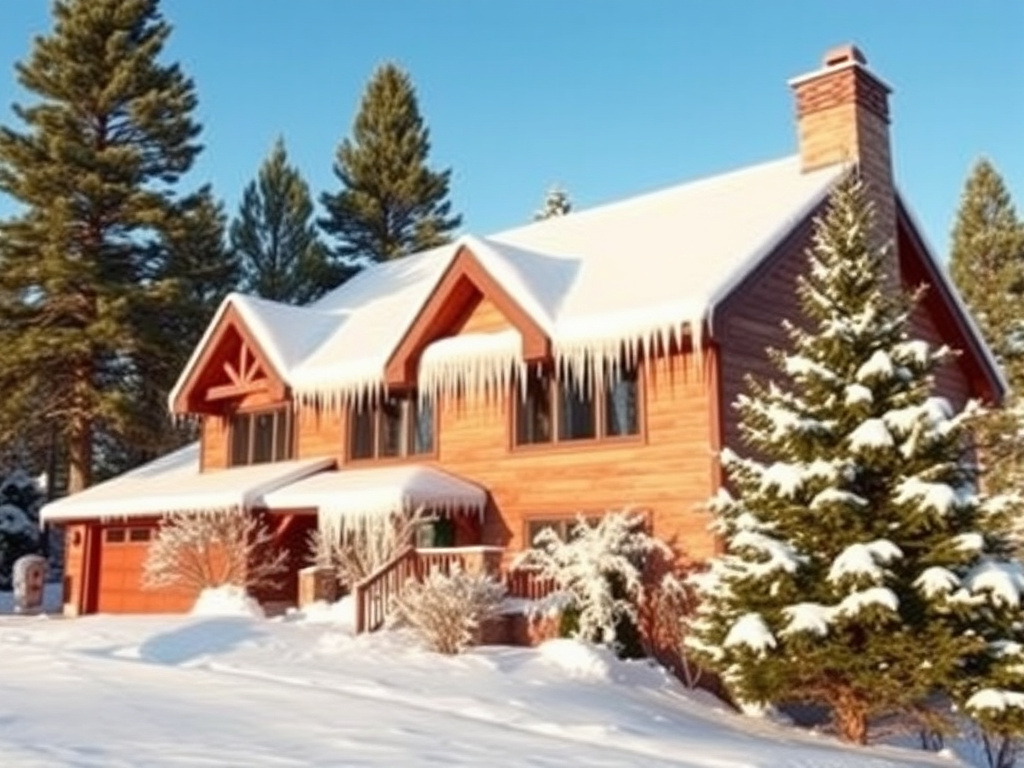
An ice dam forms in a fairly specific sequence. Heat from inside the home escapes upward through an under-insulated, poorly air-sealed attic floor and warms the underside of the roof deck. That warmth melts the bottom layer of snow sitting on the warm part of the roof, usually over the main living space. The meltwater runs down the roof slope until it reaches the eaves and overhangs — the parts of the roof that stay cold because they're not directly above heated living space — where it refreezes. Ice builds there layer by layer until it forms a dam, and the next round of meltwater has nowhere to go but sideways and backward, under the shingles and into the roof deck.
The telltale sign of a heat-loss-driven ice dam is a roof with an uneven snow-melt pattern: bare or thin snow over the main roof area, with a thick ridge of snow and ice remaining right at the eaves. That pattern is a fairly reliable visual signal that your attic is losing heat it shouldn't be.
Why Flagstaff sees this more than most Arizona towns
Ice damming is essentially a non-issue in Phoenix or Tucson — there's no sustained snowpack for heat loss to interact with. At roughly 6,910 feet in IECC Climate Zone 5B, Flagstaff has exactly the ingredients ice dams need: consistent snow cover, long stretches of sub-freezing air temperature at the eaves, and — on a lot of the area's older housing stock, particularly bungalows and cabin-era homes near downtown, the Southside historic district, and out toward Kachina Village and Mountainaire — attic insulation that falls well short of current Zone 5 guidance.
Why heat cables and ice removal don't actually fix the problem
Heat cables (electric roof de-icing cables) and manual ice-dam removal are common responses, and they're not wrong to use in the short term if a dam has already formed and water is actively threatening to get inside. But they treat the symptom, not the cause. Heat cables run every winter, add to your electric bill, and do nothing about the underlying heat loss driving the melt-refreeze cycle in the first place. Chipping ice off a roof is a maintenance chore, and doing it repeatedly increases the risk of physically damaging shingles.
What actually stops ice dams
- Attic-floor air-sealing — closing the gaps around plumbing stacks, wiring penetrations, can lights, and the attic hatch that let warm air rise directly into the attic
- Attic insulation to a proper Zone 5B R-value — industry guidance for cold-climate Zone 5 homes generally points to R49-R60, well above what a lot of older Flagstaff attics currently have
- Even roof-deck temperature as the goal — the actual target isn't 'more insulation' in the abstract, it's a roof deck that stays uniformly cold across its whole surface, so there's no warm zone to create meltwater in the first place
- Proper attic ventilation, addressed alongside insulation rather than instead of it — insulation and ventilation work together, and one without the other is an incomplete fix
Where spray foam fits in
Spray foam insulation is particularly well suited to this problem because it insulates and air-seals in a single application, closing the small gaps that fiberglass batts simply lay over rather than seal. For an attic floor, that means stopping warm interior air from ever reaching the roof deck to begin with — the most direct way to address the actual cause of an ice dam rather than managing its aftermath every winter.
The most common overlooked gaps
The specific leak points matter more than most homeowners expect. Recessed can lights that aren't rated for insulation contact, the attic access hatch itself, plumbing vent-stack penetrations, bathroom and kitchen exhaust ducting, and the top plates of interior walls are all common spots where warm air bypasses the insulation layer almost entirely, regardless of how thick the fiberglass on top of it is. A batt-only attic can look well-insulated at a glance while still leaking a surprising amount of heat through exactly these gaps — which is part of why a visual inspection alone often misses the real cause of an ice-damming problem.
Frequently asked questions
It dramatically reduces the risk by removing the heat-loss mechanism that causes them, but no insulation upgrade can override extreme weather entirely. The realistic goal is bringing your roof deck close to outdoor ambient temperature across its whole surface, which removes the melt-refreeze cycle that creates ice dams in the first place.
Generally, yes, for a durable fix. Insulation without adequate ventilation can trap moisture; ventilation without adequate insulation and air-sealing does little to stop the heat loss that causes ice dams. We assess both during an on-site visit rather than treating them as separate problems.
Ready for a free quote?
Tell us about your home and we'll build a clear, no-pressure quote.