Attic Spray Foam Insulation
In a mountain town that gets roughly 100 inches of snow a year, the attic isn't just a comfort issue — a leaky, under-insulated attic is where a Flagstaff roof loses heat fast enough to melt snow unevenly and set up ice dams at the eaves.
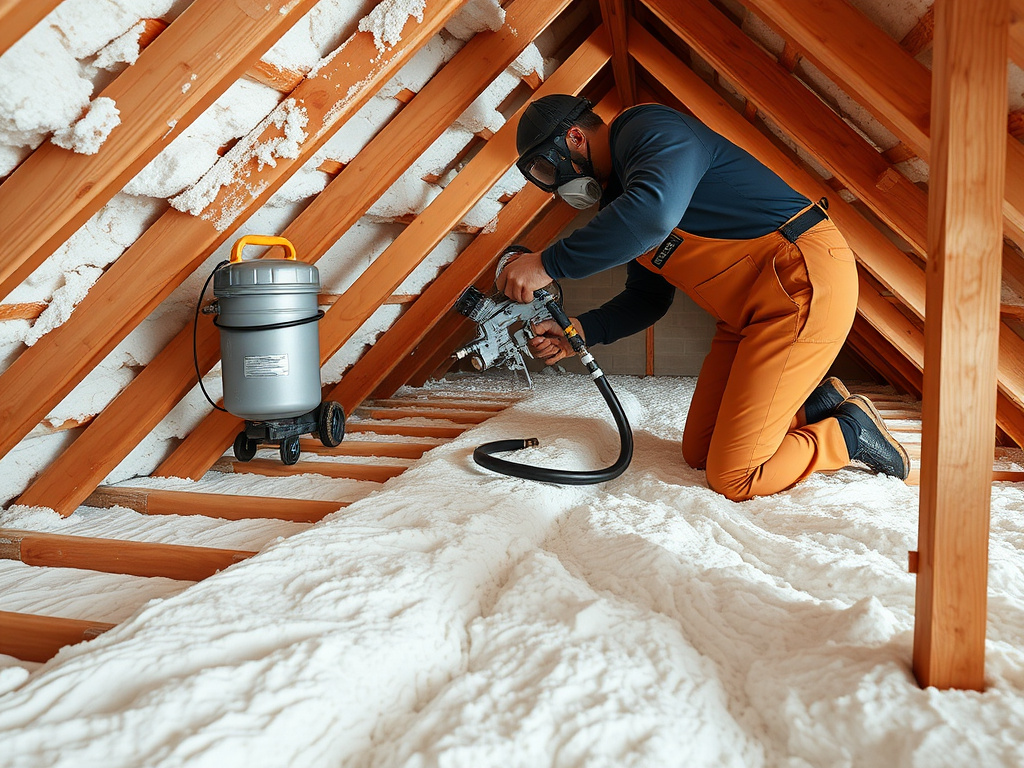
Flagstaff sits in IECC Climate Zone 5B — cold and dry, and heating-dominated in a way Phoenix, Tucson, and even Sedona simply aren't. Winters here run long, with snow on the ground for weeks at a stretch and lows regularly well below freezing from November into April. Zone 5 guidance generally calls for attic insulation in the R49 to R60 range, and a lot of Flagstaff's older housing stock — the bungalows near downtown and the Southside historic district, and cabin-era homes out toward Kachina Village and Mountainaire — was built to a much lower standard than that, or has settled fiberglass batts that no longer come close.
The bigger issue than a cold bedroom in January is what an under-insulated, leaky attic does to your roof. Heat escaping through the ceiling into the attic warms the underside of the roof deck unevenly, melting snow near the ridge while the eaves stay cold — that meltwater refreezes at the roof edge and forms an ice dam, which backs water up under shingles and into the wall and ceiling below. Spray foam solves both problems in one application: it insulates against heat loss and air-seals the attic bypasses — top plates, can lights, duct boots, the attic hatch — that let warm household air leak upward in the first place. We install both attic-floor application (foam across the attic floor, attic stays vented and cold, which is often the better call specifically for ice-dam prevention since it keeps the whole roof deck uniformly cold) and roof-deck application (an unvented, conditioned attic, the right call when ductwork runs through the attic space), and we'll walk you through which fits your home's framing and roofline during a free on-site assessment.
Why homeowners choose it
- Cuts the single largest source of winter heat loss in a Flagstaff home — the attic and roof deck — through a long, real heating season.
- Air-seals attic bypasses (can lights, top plates, duct boots, the attic hatch) that let warm air leak upward and drive uneven roof-deck heating.
- Attic-floor application keeps the roof deck uniformly cold, directly reducing the uneven snowmelt that causes ice damming at the eaves.
- Roof-deck application brings attic-housed ductwork inside the conditioned envelope, cutting the energy lost to ducts sitting in a sub-freezing attic.
- Doesn't compress or settle the way old fiberglass batts do after decades of Flagstaff's freeze-thaw cycles and heavy roof snow load.
Roof-deck vs. attic-floor application in a snow-load climate
Attic-floor application is the traditional approach and, in Flagstaff specifically, it's also the more effective choice for ice-dam prevention — foam goes across the attic floor between joists, the attic itself stays vented and cold, and a uniformly cold roof deck means snow melts evenly (or doesn't melt at all until ambient temperature rises) instead of melting near the ridge and refreezing at the eaves.
Roof-deck (unvented/conditioned attic) application sprays foam to the underside of the roof deck and gable ends, bringing the whole attic inside the home's thermal envelope. This is the stronger call when HVAC ductwork or a furnace runs through the attic, since it keeps that equipment out of sub-freezing temperatures — but it requires more careful detailing in a heavy-snow climate to avoid trapping moisture, which is exactly why this isn't a DIY call.
- Attic-floor: keeps roof deck uniformly cold, the better default for ice-dam prevention
- Roof-deck: protects attic-housed HVAC equipment from Flagstaff's sub-freezing attic temperatures, needs correct venting detail
Open-cell or closed-cell for a Flagstaff attic?
Both get used here. Closed-cell delivers more R-value per inch, which matters when roofline depth is limited by an older home's rafter dimensions, and its rigidity holds up well under the deflection heavy snow load can put on a roof structure. Open-cell is more cost-effective per board foot for attic-floor coverage where depth isn't constrained. We'll recommend the right mix for your specific roof assembly, elevation, and existing rafter or truss depth.
Ideal for
- Older Southside and downtown-area homes with original or compressed attic insulation
- Homes that have developed ice dams or icicles at the roofline in past winters
- Cabin-style homes in Kachina Village, Mountainaire, or Munds Park with attic-housed ductwork
- Homeowners noticing cold upstairs rooms or high propane/electric heating bills each winter
What affects the cost
Attic Insulation questions, answered
Spray foam insulation typically runs in the range of $1 to $5 per square foot installed industry-wide, with most projects averaging around $3 per square foot — closed-cell running higher than open-cell. A typical single-family attic project often lands in the $1,500-$2,500 minimum range and scales up with square footage and whether it's roof-deck or attic-floor coverage. A free on-site assessment gets you a firm number for your home.
In most cases, yes, and it's usually the single most effective fix. Ice dams form because heat escaping through an under-insulated, leaky attic warms the roof deck unevenly, melting snow near the ridge that refreezes at the colder eaves. Air-sealing the attic bypasses and bringing insulation up to Zone 5 levels keeps the whole roof deck at a more uniform, cold temperature, which is the actual root-cause fix — heat cables and roof rakes only manage the symptom after the fact.
Attic Insulation done right, by a local Flagstaff crew
Attic Insulation isn't a commodity — the result depends entirely on how carefully it's planned and installed for your specific home and Flagstaff's real cold-climate winters. We assess what your house actually needs, prep and air-seal properly, and install to your Zone-5B-appropriate R-value target, so the work delivers the comfort and savings it's supposed to.
We serve Flagstaff, Doney Park, Kachina Village, Mountainaire, Munds Park, Bellemont, Williams, and Parks. Every job starts with a free, no-pressure quote.
Just as important, we treat your home like the system it is. Insulation, air sealing, foundation type, and ductwork all interact, and getting one right while ignoring the others leaves comfort and savings on the table. When we scope your attic insulation, we look at how it fits the whole picture — so the finished result performs the way it should, holds up through a real Flagstaff winter, and actually lowers the bills you feel every month.
Free assessment
We evaluate your home and give you a clear, itemized quote.
Expert install
We prep, air seal, and install your attic insulation to spec — clean and on schedule.
Savings you can feel
A more comfortable home, lower energy bills, and honest advice about what your home needs.
Related services
Ready for a free attic insulation quote?
Tell us about your home and we'll put together a clear, no-pressure spray foam insulation quote — built for Flagstaff's real cold-climate winters.